Can mechanical surface treatments be used to positionally engineer microstructures?
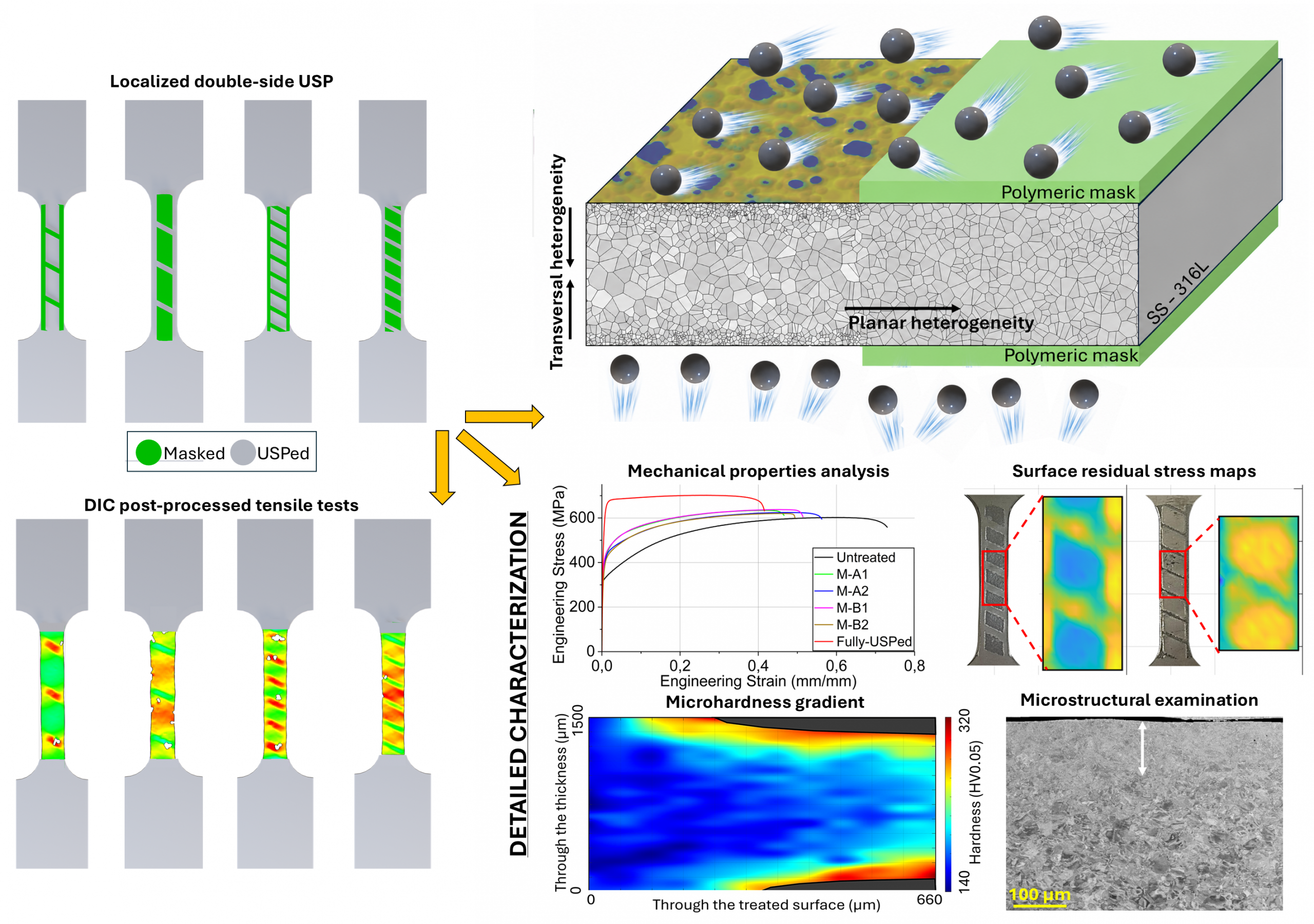
In our latest publication, we explored how selective ultrasonic shot peening (USP) can be used to create bi-directional microstructural heterogeneity in thin 316L stainless steel specimens. By introducing specially designed polymeric masks during USP, we selectively protected regions of the specimen surface, producing a patterned architecture composed of hardened (USPed) and untreated (masked) domains.
This approach enables microstructural gradients not only through the thickness, but also across the surface, offering a new way to tailor grain refinement, GND distribution, and strain localization through controlled surface treatment.
The results demonstrate the potential of selective USP as a versatile strategy for designing heterogeneous microstructures and tuning mechanical behavior. Our future work will focus on more advanced masking strategies and extending this concept to other material systems.
We’re excited to continue exploring how spatially controlled surface engineering can open new opportunities for microstructure design and performance optimization.